For a long time, getting customers online felt straightforward for local businesses: build a website, do some SEO, and wait for Google to send people your way.
That approach worked because customers followed a simple path — open Google, type a search, scan the results, click through to a website, then decide whether to get in touch.
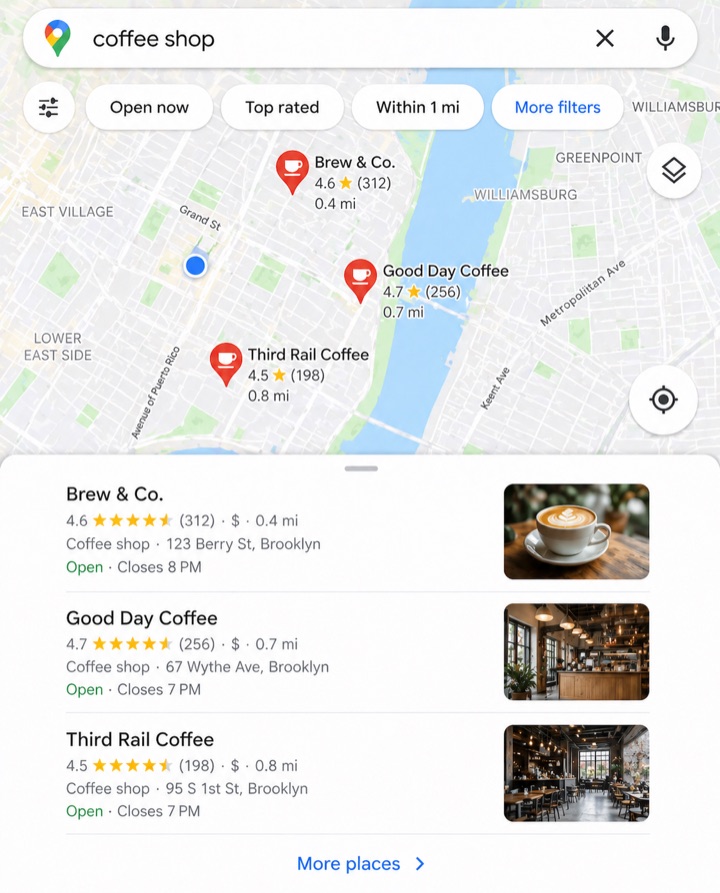
But that is no longer how it works. Customers are not just searching in the Google search bar anymore. They are opening Google Maps to find nearby businesses, or asking ChatGPT, Gemini, or Perplexity directly.
You used to need one path to work well. Now there are at least three paths shaping how customers find you, how they see you, and whether they reach out.
A Website and SEO Alone Are Not Enough Anymore
The old approach was fairly linear: build a website, write a few pages, do some SEO, and wait for rankings to improve.
The problem is that this logic assumes customers will always click through from search results to your website first. But today, many customers have already formed a first impression — from Maps, reviews, and AI summaries — before they ever visit your site.
If you have built a website but have not maintained your Google Business Profile, customers may not find you on Maps at all. If you have set up Maps but your website content is thin or vague, customers and AI tools will struggle to understand what you actually do.
Three Paths Are Running at the Same Time
It helps customers find you when they are looking for services, answers, or solutions. Searches like "local SEO Auckland" or "bilingual website design" still need clear, well-written website pages to support them.
This shapes local search results, directions, phone calls, reviews, and business hours. For restaurants, clinics, trades, and repair services, this is often where customers encounter you first.
AI tools draw on publicly available information to figure out who you are, what you do, where you serve, and whether you are credible. They do not follow traditional search rankings in the same way, but they do influence which businesses come up when someone asks for a recommendation.
Three Paths, One Foundation
These three paths are not separate. They all depend on the same foundation: your website.
A clear website gives search engines pages they can understand and rank. It gives your Google Business Profile clearer context to draw from. It gives AI tools something to read and understand.
The reverse is also true. If your website content is thin, your services are vague, or your location is not clear, all three paths suffer. Google struggles to assess relevance. Your Maps listing lacks supporting context. AI has little to work with when deciding whether to mention you.

Local businesses do not need to master everything at once or build a complicated system from day one. But one thing is worth getting right early: laying a solid foundation — being clear about who you are, what you do, where you are, who you serve, and why you are worth trusting.
Your website is not just a digital shop window. It is the infrastructure that search, Maps, and AI recommendations all rely on.
Next up: why your website is a foundation — not just a good-looking online business card. →